Resource context
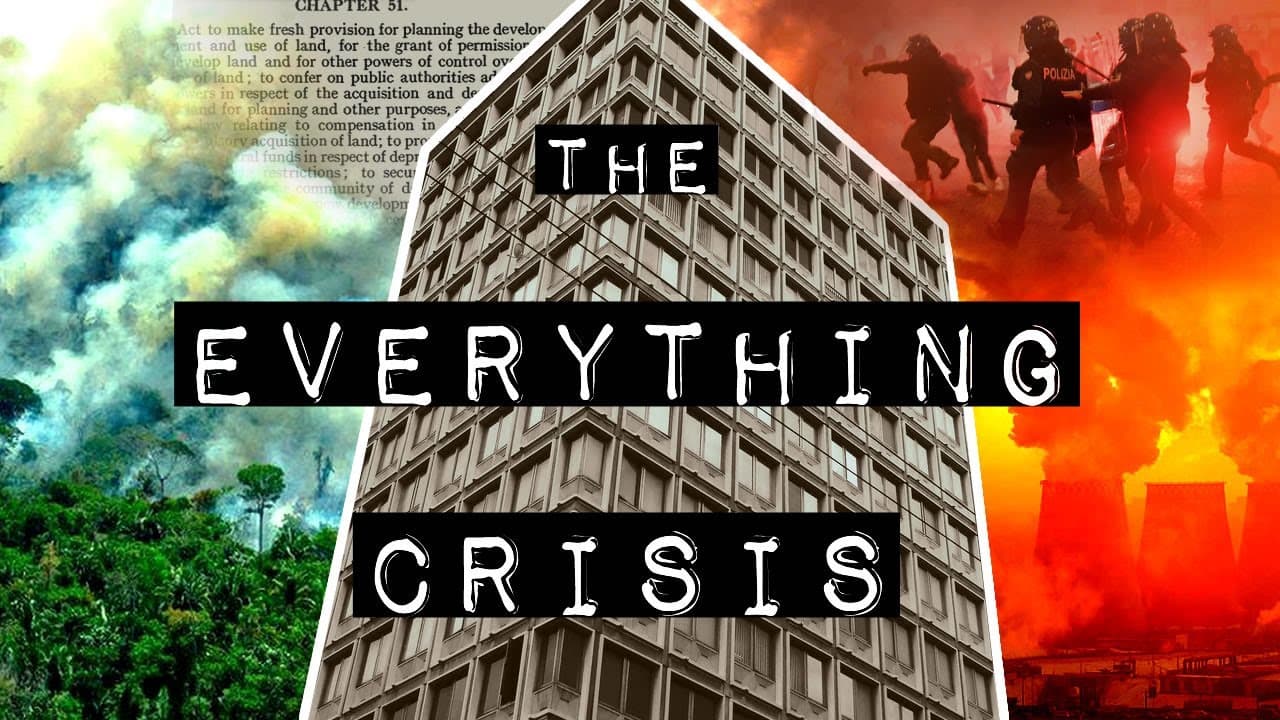
“The Housing Crisis is the Everything Crisis” is a 42:45 YouTube video from the BritMonkey channel, with BritMonkey also listed as the author. The page includes channel metadata (about 2,012,025 views) and a full auto-generated transcript captured from YouTube, positioning the resource as an accessible, long-form commentary on housing affordability and its wider impacts.
Central claim: housing as a system-wide driver
The video argues that escalating house prices and rents across “the western world” are not an isolated problem but a root cause behind multiple societal pressures. It links today’s affordability crunch to a steep decline in homebuilding after the Great Recession and describes a shift in how housing functions in the economy—from a “consumer good” to a scarce, appreciating investment asset.
Supply, speculation, and long-term affordability
A core historical narrative is that, when housing supply was high, prices were kept lower, including through direct public-sector building. The transcript contrasts post-war eras of high construction with later decades in which governments reduced building and planning constraints tightened. The result, as presented, is persistent scarcity that encourages speculation and drives ongoing price increases.
Economic stakes and productivity impacts
The resource cites research to quantify the economic cost of constrained housing supply. It references a 2015 estimate by two Chicago University professors claiming that, without the housing crisis, the United States economy would be 74% larger. It also cites a separate estimate that allowing substantially more housing in three US cities (New York, San Jose, San Francisco) would translate into pay rises of roughly $8,700–$16,000 for the average worker, framing housing as a brake on national productivity.
Poverty, homelessness, and public budgets
The transcript links housing costs directly to poverty outcomes, citing the Child Poverty Action Group to state that about half of children in poverty and around one quarter of adults in poverty in the UK would not be in poverty if housing costs were lower. For homelessness, it highlights Finland as the only European country mentioned where homelessness is falling, describing an approach of building sufficient affordable homes and housing people directly; it further claims savings of €15,000 per year per person housed due to reduced reliance on social services.
Environmental and health dimensions of housing form
Beyond affordability, the video connects housing typologies to emissions and resource use. It argues that suburban, car-dependent settlement patterns increase carbon emissions and that denser housing can reduce transport needs and energy use (including via shared walls). The transcript also describes water and biodiversity impacts, including a claim that Las Vegas banned “sterile” lawns due to water constraints.
Planning, zoning, and political barriers
Policy constraints are presented as central obstacles. The transcript discusses restrictive zoning—especially rules favouring single-family detached housing—and frames “NIMBY” opposition as a recurring political barrier that delays or blocks new construction. It also critiques rent controls using multiple city examples (including Berlin, Stockholm, St Paul, and San Francisco), arguing these policies reduce supply or shift housing toward less affordable segments.
Wider social effects and demographic pressures
The resource extends the housing link to family formation and demographic change. It states that, in the UK, each 10% rent increase correlates with a 5% decline in births, and cites a study suggesting house price rises (1996–2014) prevented 157,000 births. It also reports that about 35% of under-29s in the EU live with parents (and 40% in Britain), framing delayed independence as another consequence of unaffordable housing.
Concluding solution focus
Across these themes, the transcript returns to a single operational conclusion: materially increasing housing supply—by public, private, or cooperative actors—is presented as the most direct lever to reduce costs and relieve connected economic, social, and environmental pressures.